IdeaVaultHQ Side Hustle School
Writing Side Hustles: How to Get Started Today
Freelance writing opportunities. This guide turns the question into a practical beginner test with steps, costs, tracking, and realistic expectations.
Quick answer: Writing Side Hustles: How to Get Started Today works best when you treat it as a small test, not a fantasy business plan. Choose a beginner version, use free or already-owned tools, track time and costs, and only repeat the idea if the first test gives useful proof.
Step 1: Start With The Real Question
People searching for Writing Side Hustles: How to Get Started Today usually do not need a motivational list. They need to know what to do first, what to avoid, and how to tell if the idea is worth their time. Start by writing the plain question behind the topic: can this side hustle fit my schedule, skill level, money situation, and energy right now? That question keeps the plan grounded.
People searching for Writing Side Hustles: How to Get Started Today usually do not need a motivational list. They need to know what to do first, what to avoid, and how to tell if the option is worth their time. Start by writing the plain question behind the topic: can this small income test fit my schedule, skill level, money situation, and energy right now? That question keeps the plan grounded.
Step 2: Decide What A Beginner Version Looks Like
The beginner version should be smaller than the version people brag about online. For this topic, the starter version is a $25 blog outline or product description rewrite. The point is not to build a whole business on day one. The point is to test whether the work is understandable, whether someone wants the result, and whether you can repeat it without wrecking your week.
The beginner version should be smaller than the version people brag about online. For this topic, the starter version is a $25 blog outline or product description rewrite. The point is not to build a whole business on day one. The point is to test whether the work is understandable, whether someone wants the result, and whether you can repeat it without wrecking your week.
Step 3: Check Your Time Before You Check The Money
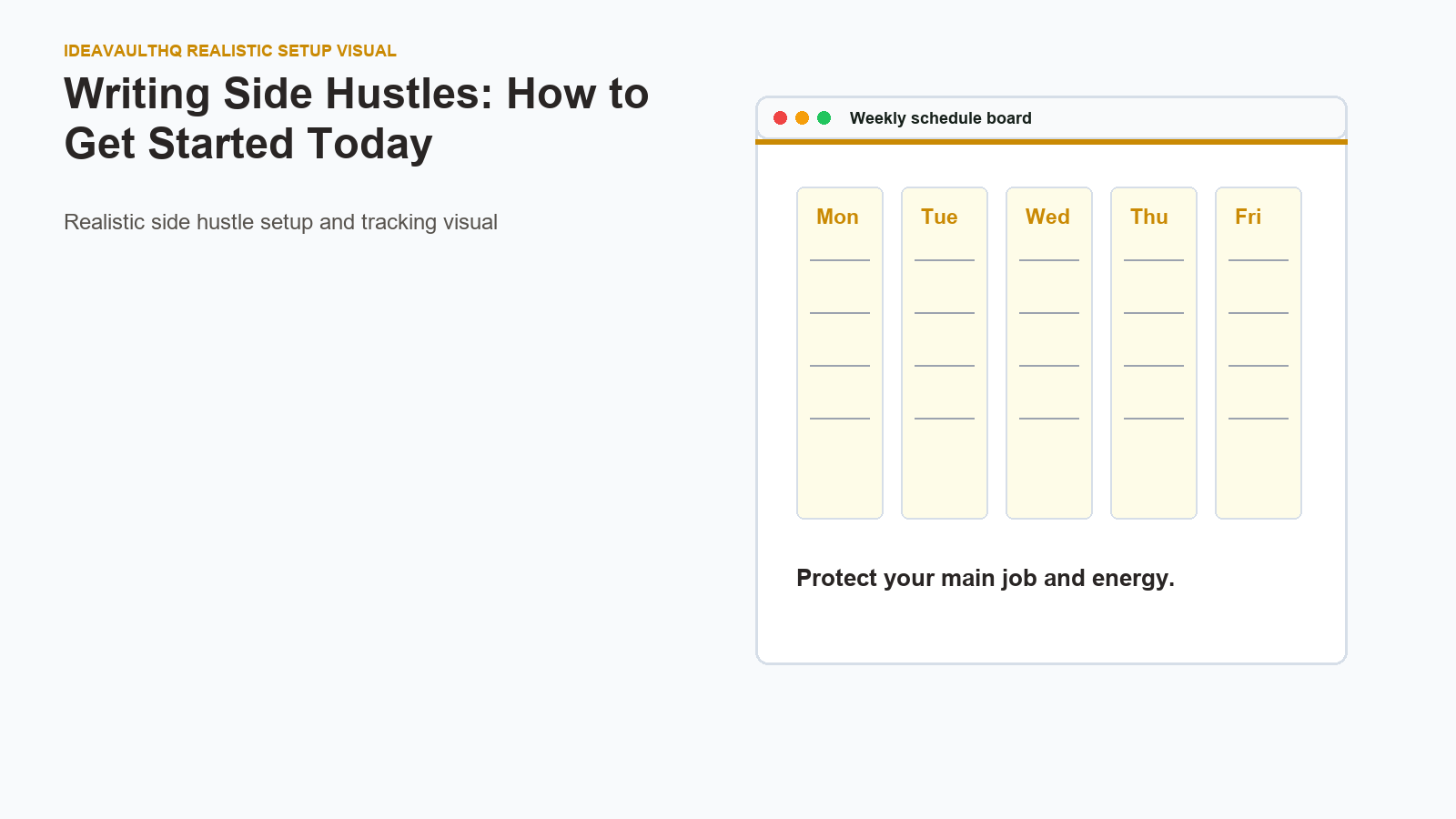
Most side hustle plans fail because the time math is fake. Write down three available blocks this week: one research block, one setup block, and one action block. If you cannot find those blocks, the idea is not impossible, but it is not ready. A realistic schedule beats a dramatic goal every time.
Most small income test plans fail because the time math is fake. Write down three available blocks this week: one research block, one setup block, and one action block. If you cannot find those blocks, the option is not impossible, but it is not ready. A realistic schedule beats a dramatic goal every time.
Step 4: Use Free Or Already-Owned Tools First
Before spending money, list what you already have: phone, laptop, car, internet connection, writing skill, local knowledge, Canva, Google Docs, Google Sheets, or a few free hours. A beginner side hustle should usually start with what is already available. Buying tools too early can hide whether the idea works.
Before spending money, list what you already have: phone, laptop, car, internet connection, writing skill, local knowledge, Canva, Google Docs, Google Sheets, or a few free hours. A beginner small income test should usually start with what is already available. Buying tools too early can hide whether the option works.
Step 5: Make One Clear Offer
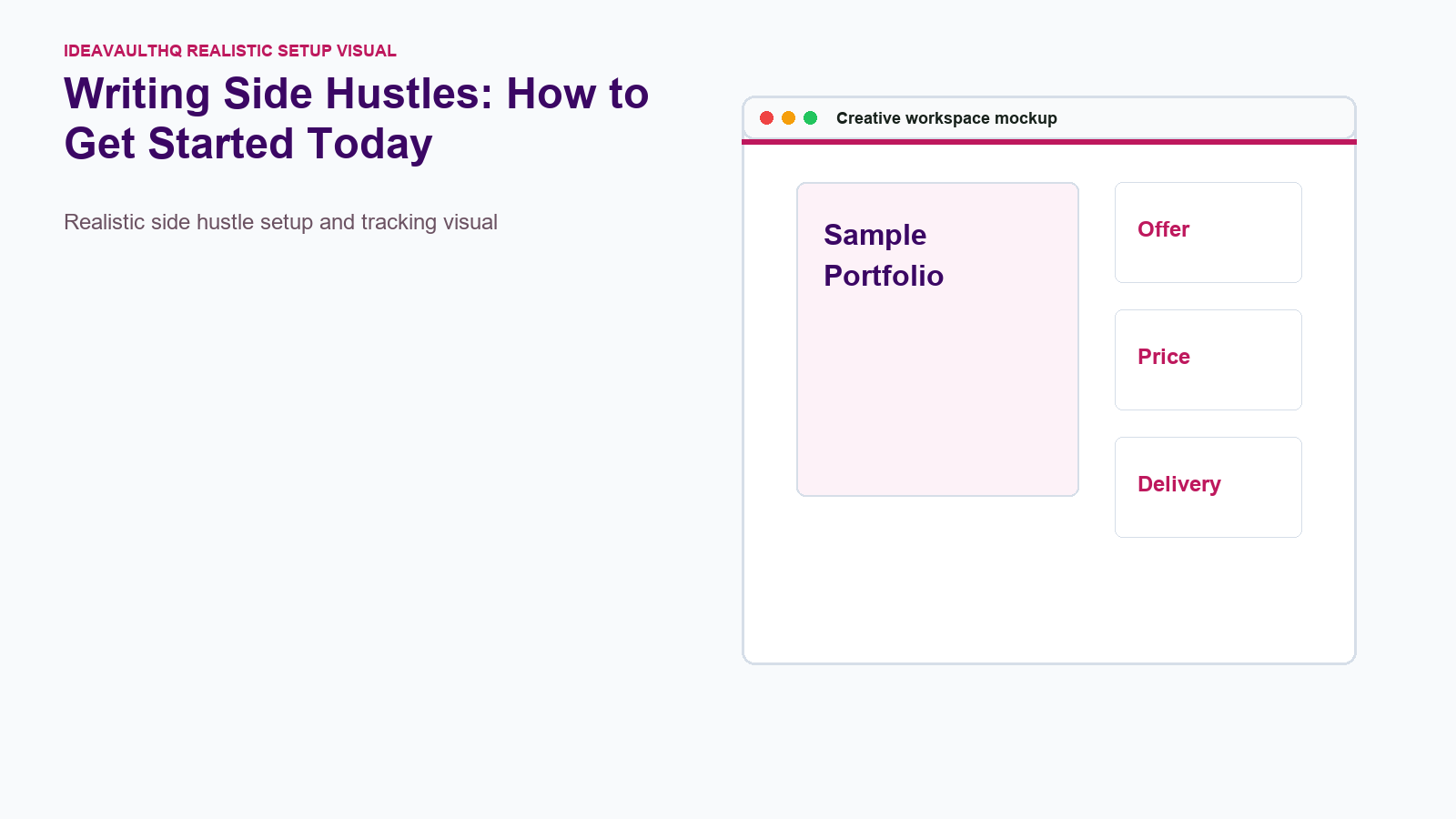
Turn the idea into one sentence: I help this person get this result by doing this task. For example, a $25 blog outline or product description rewrite. If the offer takes a paragraph to explain, simplify it. Clear offers are easier to test, easier to price, and easier to improve.
Turn the option into one sentence: I help this person get this result by doing this task. For example, a $25 blog outline or product description rewrite. If the offer takes a paragraph to explain, simplify it. Clear offers are easier to test, easier to price, and easier to improve.
Step 6: Find Where People Already Ask For Help
Use Reddit, Facebook groups, local boards, marketplace searches, job boards, and Google autocomplete to see how people describe the problem. Do not spam. Read first. Save repeated questions. The same wording people use in questions can become your blog headline, offer description, or checklist.
Use Reddit, Facebook groups, local boards, marketplace searches, job boards, and Google autocomplete to see how people describe the problem. Do not spam. Read first. Save repeated questions. The same wording people use in questions can become your blog headline, offer description, or checklist.
Step 7: Set A Small Money Target
A small target keeps the test honest. Instead of dreaming about replacing a full-time job, aim for the first $5, $20, or $50 proof point depending on the idea. If the topic involves gig work, track net earnings after costs. If it involves digital products or services, track time spent creating and delivering.
A small target keeps the test honest. Instead of dreaming about replacing a full-time job, aim for the first $5, $20, or $50 proof point depending on the option. If the topic involves gig work, track net earnings after costs. If it involves digital products or services, track time spent creating and delivering.
Step 8: Watch For Hidden Costs
Every side hustle has costs. Some are money costs, like gas, platform fees, supplies, or software. Some are time costs, like waiting, messaging, revisions, or travel. Some are energy costs, like dealing with customers after work. A useful guide should name these costs before telling someone to jump in.
Every small income test has costs. Some are money costs, like gas, platform fees, supplies, or software. Some are time costs, like waiting, messaging, revisions, or travel. Some are energy costs, like dealing with customers after work. A useful guide should name these costs before telling someone to jump in.
Step 9: Create A Simple Tracking Sheet
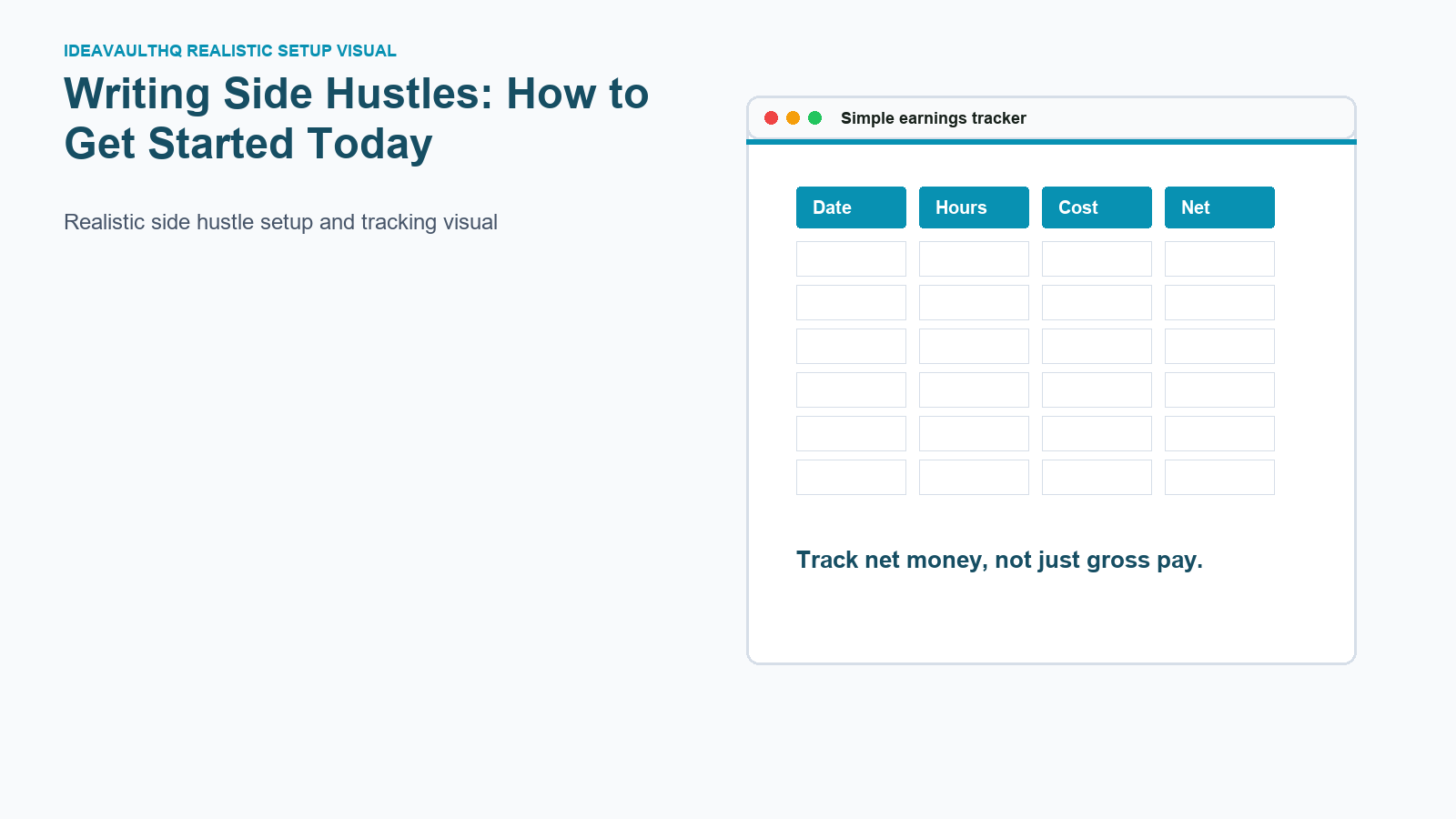
Track date, task, time spent, money earned, cost, notes, and next action. This can be a basic Google Sheet. The goal is not fancy bookkeeping. The goal is to see whether the idea is actually working. If three attempts create no useful signal, adjust the offer before repeating the same thing again.
Track date, task, time spent, money earned, cost, notes, and next action. This can be a basic Google Sheet. The goal is not fancy bookkeeping. The goal is to see whether the option is actually working. If three attempts create no useful signal, adjust the offer before repeating the same thing again.
Step 10: Improve One Piece At A Time
Do not change the price, audience, offer, platform, and schedule all at once. Improve one thing: the headline, the photo, the reply, the sample, the profile, or the delivery checklist. One change at a time teaches you what helped.
Do not change the price, audience, offer, platform, and schedule all at once. Improve one thing: the headline, the photo, the reply, the sample, the profile, or the delivery checklist. One change at a time teaches you what helped.
Step 11: Know When To Stop Or Pause
A side hustle is not a personal failure test. If the idea does not fit your schedule, costs more than it returns, or drains energy you need for work and life, pause it. The lesson is still useful. You learned what not to build next.
A small income test is not a personal failure test. If the option does not fit your schedule, costs more than it returns, or drains energy you need for work and life, pause it. The lesson is still useful. You learned what not to build next.
Step 12: Turn The Lesson Into A Repeatable System
If the first test works, write down the exact steps so you can repeat them. Save your message templates, checklist, pricing notes, and delivery process. That is how a random side hustle becomes a small system instead of a one-time scramble.
If the first test works, write down the exact steps so you can repeat them. Save your message templates, checklist, pricing notes, and delivery process. That is how a random small income test becomes a small system instead of a one-time scramble.
Step 13: Build A One-Week Test Plan
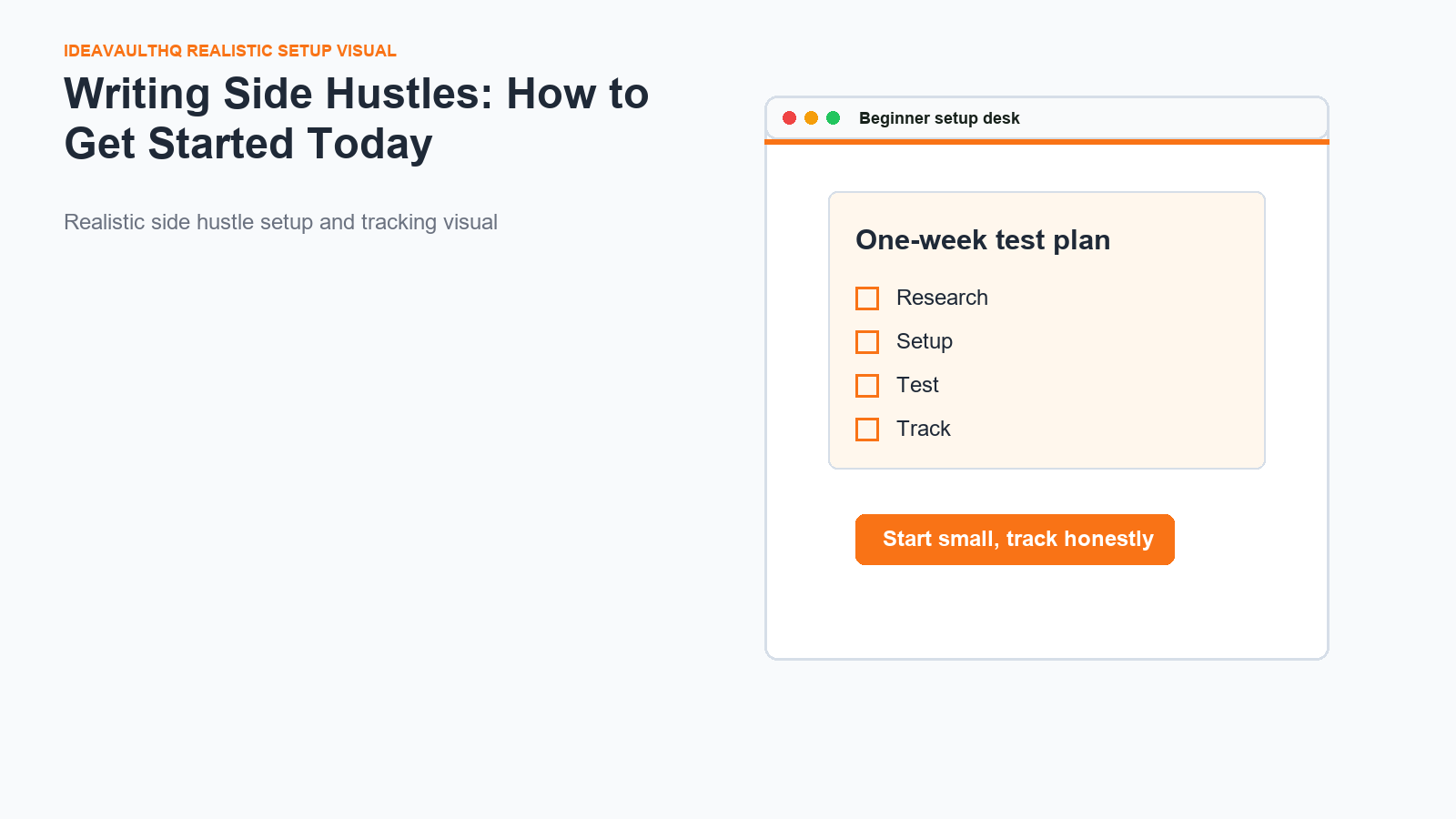
The easiest way to make this topic useful is to turn it into a one-week test instead of an open-ended dream. On day one, define the smallest version of the side hustle. On day two, gather the free tools or accounts needed to try it. On day three, create one sample, profile, listing, message, or checklist. On day four, put the offer or application in front of a real person, platform, or marketplace. On day five, track what happened. On day six, fix one weak spot. On day seven, decide whether to repeat, pause, or switch ideas.
This matters because beginners often confuse planning with progress. Reading about Writing Side Hustles: How to Get Started Today can feel productive, but the real test is whether the idea survives contact with your actual schedule. A one-week test gives you a clear finish line. You are not trying to prove that the idea can change your life. You are trying to prove whether it deserves another week.
Write the week on paper or in a simple Google Sheet. Use columns for day, action, time needed, cost, result, and next step. If the action takes longer than expected, write that down. If the cost is higher than expected, write that down too. Those notes are not failures. They are the information that helps you choose better.
Step 14: Create A Simple Decision Score
After the first week, give the side hustle a score from one to five in five areas: schedule fit, startup cost, stress level, demand signal, and repeatability. Schedule fit means the work fits around your real life. Startup cost means you can test without putting yourself under pressure. Stress level means the work does not drain more energy than it returns. Demand signal means at least one real person, platform, or search result suggests the problem exists. Repeatability means you can imagine doing the process again without reinventing everything.
A good first side hustle does not need a perfect score. It needs enough proof to keep testing. If the idea scores high on demand but low on stress, you may need a smaller version. If it scores high on schedule fit but low on demand, you may need a better audience or clearer offer. If it scores low everywhere, move on without guilt. The purpose of the score is to keep you honest.
For Writing Side Hustles: How to Get Started Today, the best next move is the one that improves the weakest score. If schedule fit is weak, reduce the time block. If demand is weak, ask better questions or test a clearer offer. If repeatability is weak, write a checklist. This turns the article into action instead of another bookmarked idea.
Step 15: Turn The Side Hustle Into A Learning Asset
Even if the first test does not make money, it can still become useful. Save your notes, screenshots, scripts, checklist, and mistakes. Those pieces can become a blog post, a template, a tutorial, or a better future test. IdeaVaultHQ is built around that idea: every small experiment can teach the next person what to try, what to avoid, and what to measure.
If the test works, document the process while it is fresh. Write down the exact message you sent, the platform you used, the time block that worked, the cost you did not expect, and the part that confused you. If the test does not work, document that too. Honest failure notes are often more valuable than vague success stories because they show beginners what the internet usually leaves out.
This is how a side hustle becomes more than a random task. It becomes a repeatable system, a tutorial, or eventually a digital product. A delivery checklist can become a template. A pricing note can become a calculator. A customer question can become a FAQ. A mistake can become a warning section. The first goal is income proof, but the second goal is learning proof.
Beginner Checklist
- Pick one small version of the idea.
- Choose one audience or buyer.
- Use free tools before spending money.
- Track time, cost, and results.
- Avoid income promises.
- Improve one thing at a time.
- Link this lesson to the next related IdeaVaultHQ tutorial.
Copy-Paste ChatGPT Prompt
You are my side hustle planning assistant. Help me turn this topic into a realistic one-week test: Writing Side Hustles: How to Get Started Today

Create:
1. A beginner version of the idea
2. The first offer or action to test
3. Free tools I can use
4. A 7-day schedule
5. What costs to watch
6. A tracking sheet layout
7. When to stop, pause, or improve

Keep it practical, honest, and beginner-friendly. Do not make income guarantees.
Continue Learning On IdeaVaultHQ
This guide is part of the IdeaVaultHQ learning path. Use the links below to keep moving.
Leave a Reply