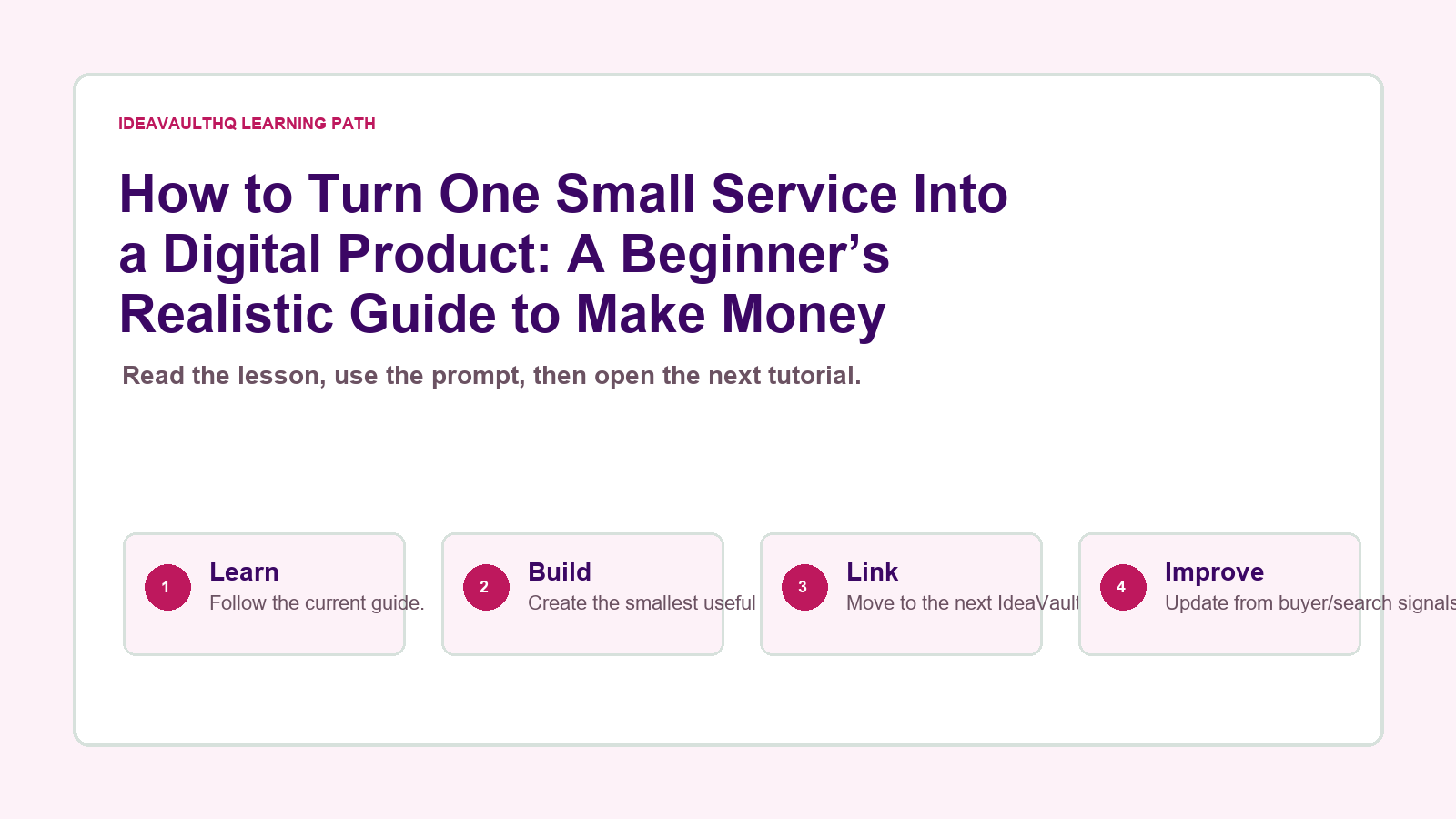
How to Turn One Small Service Into a Digital Product: A Beginner’s Realistic Guide to Make Money Online
Are you wondering how to turn a small service you can offer today — even if you have no money – into a digital product that sells online? If you’re new to making money online, this guide is for you. It walks you through understanding who buys digital products derived from simple services, how to start with minimal costs, and how to gradually build a repeatable system. We’ll cover realistic steps to earn your first $5 a day and discuss some risks so you enter this side hustle with your eyes open.
Who Is This Idea For?
This is designed for beginners who have a small skill or service they can provide but want to leverage that to create a digital product online. If you’re someone who wants a low-cost online side hustle, maybe while job hunting or testing out side gigs, this guide will help you understand a practical path from service to product without needing a big audience or startup cash.
Why People Buy Digital Products Based on a Service
Understanding why digital products sell will help you create something worthwhile. When you provide a service, you solve a problem for a client. Turning that service solution into a digital asset — like a template, guide, checklist, or toolkit — means the solution can help many people without additional time spent per sale. Buyers pay for things that save them time, reduce hassle, or help them learn a skill quickly.
For example, if you’re good at creating social media posts, you might build a pack of 50 Instagram caption templates. Small businesses or busy creators pay because it saves them time and effort. Even though you created just one service for one client initially, packaging your solution extends its value to more buyers.
Choosing Your Small Service to Turn Into a Digital Product
Start by picking one simple service you can do well and repeatedly. It should preferably be something:
- In demand on freelance sites or small-business forums
- Easy to document or standardize
- Scalable into a template, course, or resource
Examples include:
- Basic resume or cover letter writing
- Simple social media graphic design (e.g., Canva templates)
- Organizational tools like budget spreadsheets
- Blog post outlines for specific niches
- Copywriting swipe files for emails
Choose one that matches what you know or can research quickly.
How to Start With Little or No Money
You don’t need a fancy website or paid tools to begin. Here’s how to keep costs near zero:
- Use free tools: Canva, Google Sheets, Google Docs, or free graphic design tools.
- Work on marketplaces: Platforms like Etsy or Gumroad let you sell digital products with no upfront cost.
- Leverage free social media: Use Instagram, TikTok, or LinkedIn to start sharing your product and build interest.
- Validate demand: Before investing time, ask friends or small groups if they would pay for what you plan to offer.
For example, if you want to sell budgeting spreadsheets, create a simple Google Sheet template and share it on a free platform to test interest.
Building Your First Digital Product: Step-by-Step
Here’s a realistic sequence:
- Deliver the service once: Offer your service to 1-3 clients, learn common questions or needs.
- Create a template or guide: Package your solution as a downloadable file (e.g., PDF checklist, Excel template).
- Set a low price point: Aim for $5–$15 to lower buyer risk.
- Choose a selling platform: Gumroad or Etsy are beginner-friendly digital storefronts.
- Write a clear description: Explain what problem your product solves and who it’s for.
- Promote organically: Join relevant groups, use hashtags, or post to small communities related to your product.
This method minimizes risk and costs while building assets you can improve over time.
Automating Parts of the System Using ChatGPT
Automation saves time and scales your effort. ChatGPT can help you:
- Create product descriptions or sales emails based on your product details.
- Generate FAQs or basic customer support replies.
- Draft blog posts or social media content to drive traffic organically.
- Help create or improve templates by suggesting additional items or improving wording.
For example, once you have a budget spreadsheet, ask ChatGPT to write a quick start guide for users or create email templates for customer outreach.
Realistic First $5/Day Plan
Starting small limits stress and unrealistic expectations. Here’s a plan to reach a $5/day average:
- Sell a $5 product and aim for one sale per day, or two sales every other day.
- Drive traffic by posting in relevant online forums, Facebook groups, or niche Reddit communities at least 3 times a week.
- Ask early buyers for reviews to boost trust.
- Continuously refine product and pitch based on feedback.
Making your first consistent sales proves the idea works and lets you reinvest any profit into better marketing or product upgrades.
Organic Traffic Strategies to Grow Your Sales Without Paid Ads
Paid ads are tempting but costly. Focus on free, organic methods:
- SEO-friendly blog posts: Write about problems your product solves using specific long-tail keywords. This draws visitors who may buy your digital product.
- Social media engagement: Answer questions, join conversations, and post useful tips related to your product niche.
- Collaborate: Partner with bloggers or influencers for shoutouts or guest content.
- Forums and communities: Help people genuinely without spamming. Include your product link when relevant.
Organic growth is slower but sustainable and builds trust over time.
Risks and Warnings: What to Watch Out For
Be aware:
- No guaranteed income: Digital products require effort, testing, and patience. Some products may never catch on.
- Time commitment: Expect to spend several weekends creating and promoting before seeing sales.
- Competition: Popular niches can be saturated. Stand out by focusing on unique angles or quality.
- Legal and ethical considerations: Don’t copy others’ work; create original content or templates.
- Customer skepticism: Low trust in unknown sellers means you need to build credibility gradually.
Keeping these in mind will help you avoid common pitfalls and set realistic expectations.
Next Steps Checklist: Turn Your Small Service Into a Digital Product
- Choose one simple, in-demand service you can do well.
- Offer the service to a few clients to identify common needs.
- Create a digital product version (template, guide, checklist) that solves these needs.
- Set up a free seller account on Etsy, Gumroad, or similar.
- Price low to encourage first buyers ($5 to $15).
- Write a clear description using keywords your ideal customer searches for.
- Promote organically through social media, blogs, and online communities.
- Use tools like ChatGPT to automate content creation and outreach messages.
- Track sales and feedback; improve product accordingly.
- Repeat the cycle to build a small portfolio of digital products.
Following this checklist steadily will help turn your small service into a sustainable online income stream.
What It Means to Turn a Small Service Into a Digital Product—and Why It’s Perfect for Today’s Side-Hustle Trend
Turning a small service into a digital product essentially means taking a specialized skill or task that you offer to clients one-on-one and packaging it into a standalone, self-serve product that can be sold repeatedly without much extra effort. For example, if you’re a freelance graphic designer who usually creates custom social media templates for each client, you could instead design a collection of templates and sell them as a downloadable digital product on your website. Once you create these templates, customers can purchase and use them on their own, freeing you from the time-intensive back-and-forth that custom projects require.
Why is this approach becoming such a popular side hustle? First, it aligns perfectly with the digital economy, where more people want easy, instant solutions they can grab and implement immediately. Consumers increasingly favor products they can access right away, especially if they solve a problem quickly or add efficiency to their work or personal life. Digital products meet this by being accessible 24/7, requiring no shipping, and delivering immediate value.
Second, this model capitalizes on the growing trend of passive and semi-passive income streams. Unlike traditional freelancing or service work, which demands your active engagement for every project, digital products let you work once and sell many times. After the initial creation and setup — which can be done during evenings or weekends — the product can continuously generate income with minimal ongoing maintenance. This scalability makes it highly attractive for side hustlers who want to build something lasting without sacrificing their daytime job or personal commitments.
Third, the technology landscape today makes it incredibly feasible for beginners to create and sell digital products. Tools like WordPress combined with e-commerce plugins, digital marketplaces, and online payment platforms have eliminated most of the technical headaches once associated with selling online. You don’t need to be a developer; many user-friendly platforms allow you to publish and promote your product quickly and affordably.
Moreover, there’s a growing consumer appetite for digital products tied to self-improvement, business growth, and productivity. For instance, entrepreneurs and freelancers seek ready-made templates, checklists, guides, and tools that help them streamline their operations without reinventing the wheel. This creates a steady market for service-based professionals to repurpose their knowledge into products such as eBooks, templates, worksheets, or mini-courses.
Finally, turning a service into a digital product fits both the creator’s lifestyle and economic realities of today’s workforce. It allows for creative control and flexibility, reduces dependency on client timelines, and opens up new revenue channels. This side hustle approach is ideal for those testing the waters of entrepreneurship or looking for a reliable source of supplemental income that can grow over time.
In summary, transforming a small service into a digital product not only leverages your existing skills but also taps into the modern side hustle ethos: smart, scalable, accessible, and aligned with the digital-first habits of today’s consumers. This makes it a strategic and sustainable option for anyone aiming to make money online without overwhelming their schedules.
Who Should Try Turning a Small Service Into a Digital Product—and Who Should Avoid It
Creating a digital product from a small service can be a game-changer, but it’s not a one-size-fits-all solution. Understanding whether this side hustle fits your skills, goals, and circumstances is crucial before diving in.
Who Should Give This a Go?
1. Service Providers Looking to Scale: If you’re currently doing a small service—like freelance writing, graphic design, coaching, or consulting—and you want to leverage your expertise to serve more people without trading time for money, this approach is ideal. Transforming your service into a product (templates, guides, or video courses) helps you multiply income streams by selling to many customers at once.
2. Creatives Who Love Structuring Their Knowledge: Turning your service into a digital product requires organizing your expertise into digestible, repeatable formats. If you enjoy breaking down your process step-by-step and packaging it in a user-friendly way, you’ll find satisfaction here. For example, a social media manager might build a set of content calendars or posting templates for sale.
3. People Seeking Location Independence and Passive Income: After you create a digital product, it can generate revenue with relatively low ongoing effort compared to one-to-one services. This is perfect for those who want to work remotely and earn with less daily client interaction. You can automate sales through WordPress plugins and benefit from scalability.
Who Might Want to Hold Off?
1. Those Without a Clear Niche or Specialized Skill: Digital products sell best when they solve a specific problem or fulfill a targeted need. If you don’t have a defined service or expertise to translate into a product, you may struggle to stand out. It’s wiser to first hone a service that you know inside-out before attempting to productize it.
2. People Hesitant to Learn Online Marketing and Tech: Building and selling digital products on WordPress involves some technical setup and ongoing marketing. If you’re not comfortable learning how to create sales pages, handle payment gateways, or do basic SEO and content marketing, this side hustle might create frustration. However, many beginner-friendly tools and tutorials exist if you’re willing to invest some time.
3. Anyone Expecting Quick, Hands-Off Profits: While the concept promises passive income, the reality is that creating digital products requires upfront effort—research, design, testing, and promotion. If you want immediate returns with no marketing or maintenance, this may not be your best choice. The initial sprint can be challenging but pays off with persistence.
At its core, turning your service into a digital product is a smart next step for those ready to expand their business beyond one-on-one client work. Consider your strengths, willingness to learn, and long-term goals carefully to decide if this lucrative path aligns with your side-hustle ambitions.
Getting Started Today: Step-by-Step Directions
- Identify one small, repeatable service you provide or can learn quickly.
- Find 1-3 people to whom you can offer this service free or low-cost to understand their needs.
- Document the service process step-by-step and note common client questions.
- Design a simple template, checklist, or guide addressing these core problems using free tools like Canva or Google Docs.
- Create a seller account on Gumroad or Etsy, upload your product file, and write a keyword-optimized product description.
- Share your product link in at least three relevant online groups or channels.
- Set alerts to follow up on questions or feedback.
Image Blocks
Copy-Paste ChatGPT Prompt to Automate Your Product Creation and Outreach
"I have a digital product idea based on a simple [describe your service, e.g., social media post template] that helps [target audience, e.g., small businesses increase engagement].

Please help me:
1. Write a compelling product description that explains the benefits clearly and includes relevant keywords.
2. Create 3 short social media post captions to promote this product organically.
3. Draft a friendly outreach message to send to small business owners introducing my product and offering a discount for first buyers.

Make the tone practical, honest, and beginner-friendly."
Success Diagram For This Idea
This is the simple path from idea to first-dollar proof for How to Turn One Small Service Into a Digital Product.
Best starting angle: digital product angle.
Continue Learning On IdeaVaultHQ
This guide is part of the IdeaVaultHQ Template School path. Use the links below to keep moving instead of stopping on one article.
Leave a Reply