Introduction: Your Beginner-Friendly Roadmap to a Side Hustle During Job Hunting
Searching for your first full-time job can be tough and stressful, especially in a crowded market with fierce competition. But what if you could start earning some income now by leveraging your tech skills and a modest budget of around $600? This guide provides a detailed, step-by-step beginner setup plan for building a low-cost online side hustle, allowing you to develop practical experience, gain confidence, and boost your finances—all while continuing your job search.
You don’t have to be a tech expert or risk a large investment. This approach suits those with fundamental computer and smartphone know-how, basic digital troubleshooting abilities, or an eagerness to learn. Your side hustle will focus on simple tech support and digital services for small clients like local businesses or individuals who need reliable, affordable help.
Who Is This Guide For?

This plan is tailored to:
- Young adults and recent graduates seeking their first full-time employment but who want supplemental income now.
- Individuals comfortable with computers, social media, or smartphones but uncertain how to turn those skills into money.
- Anyone with a limited budget looking for low-risk online opportunities.
- People who prefer clear, practical advice over hype-filled promises.
The Big Idea: Low-Cost Tech Support and Digital Services for Small Clients
Many small businesses and local entrepreneurs need help managing their online presence and solving minor tech problems. Your services provide convenience and value without expensive contracts. Services might include:
- Setting up or optimizing social media accounts like Facebook, Instagram, and LinkedIn.
- Creating basic websites using free or low-cost website builders.
- Assisting with common computer problems such as virus removal or software installation.
- Helping clients list items for sale on platforms like eBay or Craigslist, including writing descriptions and photographing products.
- Advising on buying affordable gadgets or digital tools.
Why This Side Hustle Works Right Now
Post-pandemic shifts and technology reliance mean even small businesses want an online footprint but may lack the time or expertise to build it themselves. Many customers seek affordable solutions from someone local and dependable rather than expensive agencies or complicated freelancers. This gap creates a real opportunity for beginners.
Pre-Launch: Assessing Your Skills and Resources

Before launching, take stock of what you already have:
- Tech skills: Are you comfortable setting up social media pages? Can you troubleshoot basic PC issues or create simple WordPress sites?
- Equipment: A computer or laptop with internet access, and a smartphone for communication.
- Budget of $600: To be spent smartly on essential tools and marketing.
- Time availability: How many hours can you invest weekly balancing job hunting and building your side hustle?
Being honest here helps focus your efforts and manage expectations.
Step 1: Decide Your Core Services
Pick 2-3 beginner-friendly services to focus on. Examples include:
- Social media profile setups: Creating and optimizing Facebook business pages or Instagram profiles.
- Website creation: Building basic WordPress or Wix sites using free templates.
- Basic PC troubleshooting: Remote help with malware scans, software installations, performance tuning.
- Online selling assistance: Photographing and listing products on marketplaces.
Starting narrow helps you build expertise and efficiency.
Step 2: Set Up Your Professional Online Presence
- Create a simple, clear website: Use free WordPress themes, Wix, or Google Sites. Your website should explain your services, prices, and contact info.
- Make profiles on freelancing/community sites: LinkedIn, Facebook Groups, Nextdoor, Reddit (/r/forhire, /r/slavelabour).
- Prepare service descriptions and pricing: Keep prices low ($5-$10 range) to attract first clients.
- Set up a business email address: Use free Gmail or domain email to communicate professionally.
Step 3: Invest Your $600 Budget Wisely
Allocate funds to essential items:
- Purchase a domain name (~$10/year) and basic hosting plan (~$5/month) if creating a WordPress site.
- Optional: Upgrade your smartphone or buy a used laptop within your budget to improve service delivery.
- Use free tools for invoicing (Wave), project management (Trello), and communication (Zoom, WhatsApp).
- Reserve a small budget ($50-$100) for boosting select social media posts or buying an affordable camera lens attachment for better product photos.
Step 4: Create Templates and SOPs for Efficiency
Working smarter saves time and reduces errors:
- Draft email templates for introduction, pricing, follow-up, and completion messages.
- Create checklists for your services (e.g., social media setup steps).
- Use spreadsheet or simple CRM to track clients and payments.
- Establish clear payment methods: PayPal, Venmo, bank transfers.
Step 5: Find Your First Clients
Use free and local channels before scaling:
- Join local Facebook groups and post service offers clearly stating benefits and prices.
- Reach out to friends, family, neighbors, or acquaintances who might need digital help.
- Browse small business directories or LinkedIn and send friendly messages offering your assistance.
- Participate in online forums genuinely, answering related questions to build trust and subtly mention your skills.
Step 6: Deliver Quality Work and Build Your Reputation
Your first clients are your most important. Take these steps:
- Communicate clearly and confirm expectations.
- Meet deadlines diligently.
- Offer slight discounts or extras in exchange for testimonials.
- Request honest reviews you can display on your website and social profiles.
- Learn from feedback and improve your process continually.
Step 7: Manage Your Earnings and Reinvest Smartly
Track everything carefully:
- Record income and expenses using free tools like Wave or Google Sheets.
- Set aside money for taxes and bills.
- Reinvest part of your profits into:
- Improving your website and marketing.
- Purchasing better equipment or software.
- Paying for low-cost ads targeting local customers.
Step 8: Expand and Automate Your Workflow
Once you have steady clients and processes:
- Use project management apps (Asana, Notion) to schedule work efficiently.
- Standardize service packages and pricing.
- Create FAQs and automated responses to handle inquiries quickly.
- Set weekly outreach goals to post new ads, engage in forums, and update your website with fresh content.
- Consider learning advanced skills over time (basic SEO, digital marketing) to offer more value and increase rates.
Step 9: Grow Organic Traffic and Customer Trust
Creating helpful online content pays off in the long run:
- Write blog posts or social media tips about easy tech fixes or setting up digital tools.
- Make short video tutorials on platforms like YouTube or TikTok with links to your services.
- Encourage customers to leave reviews on Google My Business and Facebook.
- Engage authentically in online communities without spamming.
Common Concerns and How to Address Them
- “I don’t have advanced skills.” Focus on simple, repeatable tasks you can learn fast and do well.
- “I’m worried about scamming or being scammed.” Always confirm payment before starting, use contracts or clear messages, and work with trusted clients first.
- “Time management feels overwhelming.” Start small with low hours and improve workflows before scaling up.
- “Taxes and legal issues seem complicated.” Research local freelance regulations early or consult free community resources to stay compliant.
First Month Example Plan: Making $5 Per Day
Here’s a simple daily plan to meet your first income goal:
- Each day, offer one or two small services like setting up a social media profile or cleaning a PC remotely.
- Price services at $5-$10 each.
- Use local Facebook groups and forums to find clients.
- Spend a few minutes daily posting ads and responding to inquiries.
- Deliver high-quality, punctual service and ask for reviews.
- Save and reinvest 20-30% of earnings into better marketing.
Final Thoughts: A Sustainable Side Hustle While Job Hunting
Building a low-cost tech service side hustle isn’t a get-rich-quick scheme, but it is a practical way to gain skills, earn money, and improve your resume. By concentrating on beginner-friendly services, maintaining affordable prices, and steadily building your reputation, you’ll create a sustainable income source that enhances your professional profile and flexibility.
Remember, consistency, good communication, and quality work are your best tools to grow. Use free and affordable resources wisely, keep learning, and stay genuine with your clients. Over time, this side hustle can become a meaningful complement to your job search, providing financial stability and confidence for your next career step.
Continue Learning On IdeaVaultHQ
This guide is part of the IdeaVaultHQ Template School path. Use the links below to keep moving instead of stopping on one article.
Success Diagram For This Idea
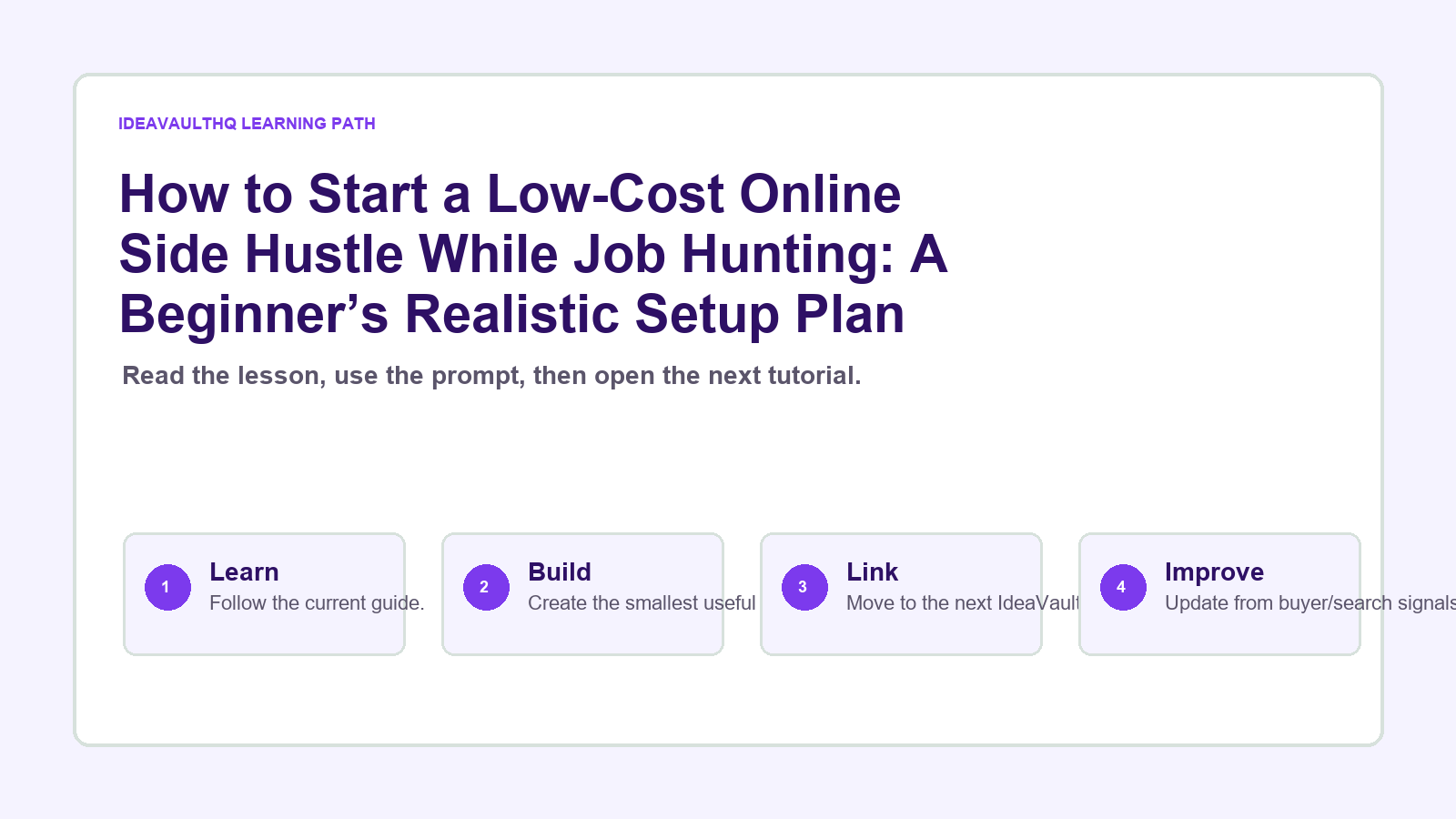
This is the practical path from reading How to Start a Low-Cost Online Side Hustle While Job Hunting: A Beginner’s Realistic Setup Plan to turning the idea into a small testable offer.
Leave a Reply